
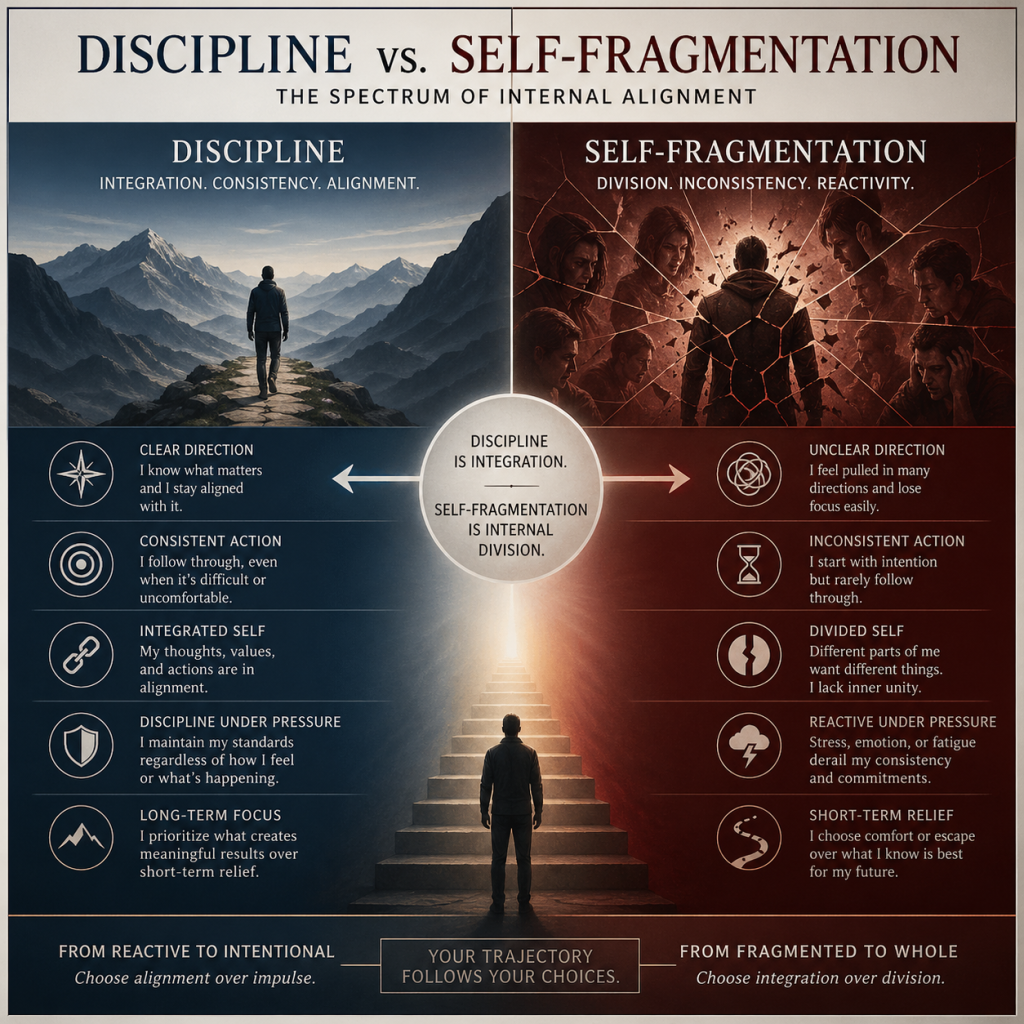
Discipline vs. Self-Fragmentation Assessment
A spectrum assessment of internal alignment, consistency, and the ability to act with integrity over impulse
Discipline is not simply effort or willpower, but the result of internal alignment, where thoughts, values, and actions move in the same direction. Self fragmentation, by contrast, is the experience of being divided within, pulled by competing impulses, emotions, and priorities that lead to inconsistency and drift. Most struggles with discipline are not failures of motivation, but symptoms of this deeper misalignment. As awareness increases, a person can begin to integrate these divided parts, acting more consistently with what they know to be true. Over time, this shift from fragmentation to alignment creates stability, clarity, and a steady trajectory forward.
Instructions
For each statement, rate how true it is for you:
1 – Strongly disagree
2 – Disagree
3 – Neutral
4 – Agree
5 – Strongly agree
Answer based on how you actually operate, especially when you are tired, stressed, or under pressure.
Section 1: Internal Alignment vs Inner Conflict
- I often feel pulled in different directions internally
- I struggle to act consistently with what I know is right
- I feel like different parts of me want different things
- I make decisions I later question or regret
- I experience internal tension when trying to commit to a path
What this reveals: Internal division vs integrated direction
Section 2: Follow-Through vs Breakdown
- I start things with intention but struggle to follow through
- I abandon plans when they become difficult or uncomfortable
- I rely on motivation rather than structure
- I find it hard to maintain consistency over time
- I often delay or avoid what I know I need to do
What this reveals: Inconsistency vs sustained discipline
Section 3: Impulse vs Intentional Action
- I make decisions based on how I feel in the moment
- I give in to short-term relief even when it conflicts with my goals
- I struggle to delay gratification
- I rationalize decisions that go against my long-term interests
- My behavior changes depending on my emotional state
What this reveals: Reactivity vs intentionality
Section 4: Avoidance vs Engagement
- I avoid tasks or situations that feel uncomfortable
- I distract myself when faced with difficulty
- I delay important decisions
- I stay busy with less important things to avoid what matters
- I struggle to confront challenges directly
What this reveals: Avoidance patterns vs direct engagement
Section 5: Identity Stability vs Fragmentation
- I feel like I am not the same person in different areas of my life
- I act differently depending on who I am around
- I struggle to define who I really am
- I feel disconnected from my deeper values
- I experience inconsistency between what I believe and how I act
What this reveals: Fragmented identity vs integrated self
Section 6: Structure vs Drift
- I lack a clear structure for how I manage my time and energy
- I often move through my days reactively
- I feel like I am drifting rather than directing my life
- I struggle to prioritize what matters most
- My routines are inconsistent or unstable
What this reveals: Drift vs intentional structure
Section 7: Discipline Under Pressure
- I lose consistency when I am stressed or tired
- I abandon commitments when things become inconvenient
- I struggle to maintain standards without external accountability
- I revert to old habits under pressure
- I rely on circumstances being ideal to stay disciplined
What this reveals: Conditional discipline vs resilient discipline
Scoring and Interpretation
Rather than a single total score, look at patterns across sections:
- Higher scores → stronger tendencies toward fragmentation, inconsistency, and reactive behavior
- Lower scores → stronger alignment, consistency, and disciplined action
Key insight:
Discipline is not about intensity. It is about integration.