
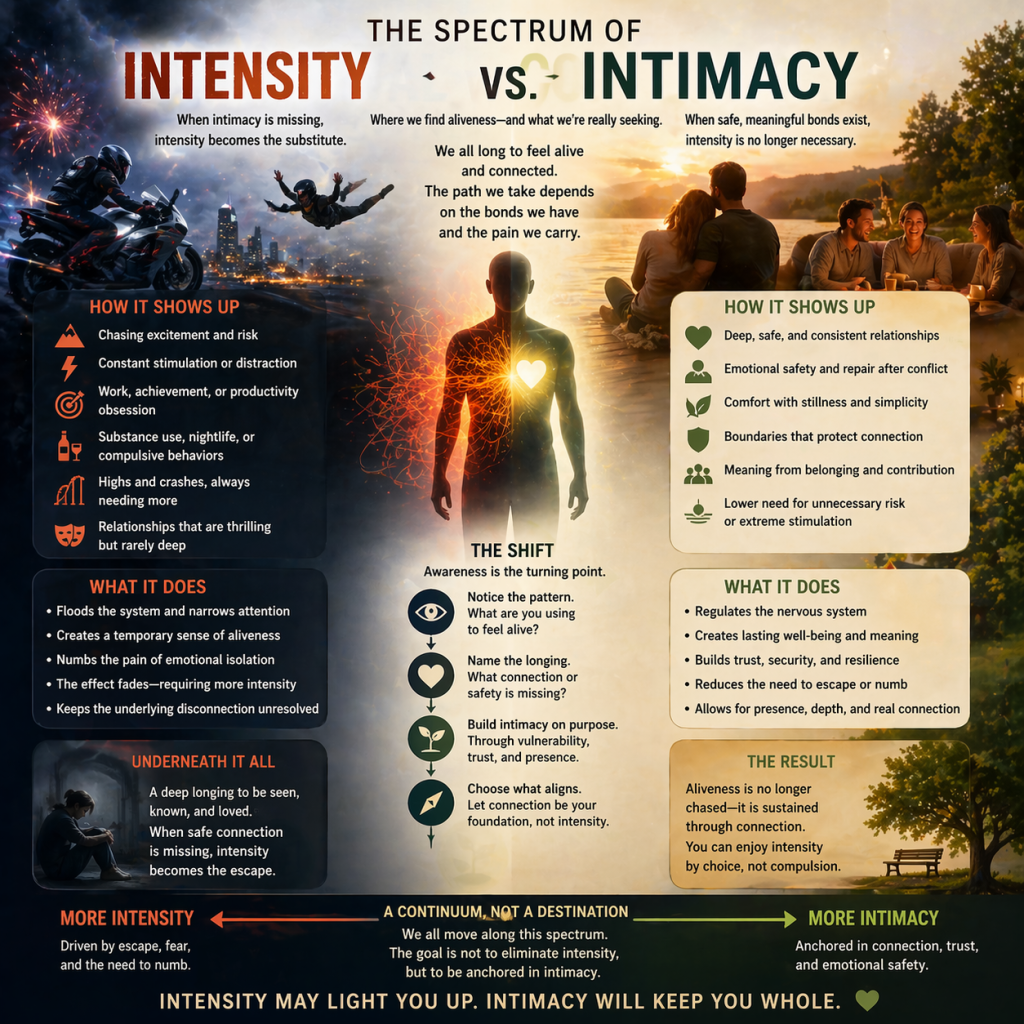
In this spectrum series we look at some fundamental psychological spectrums that are vital for self-awareness. Intensity vs Intimacy is one of the most profound insights available. While it is normal for younger people, especially boys, to engage in risky behavior and seek out intense experiences, females often do the same. What does intensity look like? It is more than just driving fast or theme park rides. Intensity can be viewing pornography, intense sexual experiences, using drugs, seeking out fairy tale “falling-in-love” experiences, crime, theft, fighting, anger, protesting, being an “outlaw”, chasing or running away, being a rebel or revolutionary, workaholics, high-pressure high-intensity jobs, and add a long list of emotional experiences that are considered intense. What looks like a preference for excitement, risk, or stimulation is often an adaptation to an absence of safe, meaningful connection. This is the spectrum of intensity versus intimacy, and it shapes how people regulate emotion, pursue experience, and relate to others.
Intimacy, in its healthiest form, is not just closeness. It is the experience of being known, received, and emotionally safe with another person. It requires consistency, trust, and the ability to repair when something goes wrong. When these conditions are present, the nervous system settles. There is less need to seek relief through extremes because the baseline experience of life includes connection, regulation, and meaning. A person grounded in this kind of relational safety does not lose their desire for novelty or challenge, but they are not driven by it. They can tolerate stillness, they can remain present, and they are less likely to pursue high-risk or high-intensity experiences as a way of managing internal discomfort.
When that kind of intimacy is missing, the system adapts. Emotional isolation does not always appear as loneliness in an obvious sense. It often shows up as a lack of depth in relationships, a sense of being unseen, or an inability to fully relax into connection. Over time, this creates an internal tension. The need for closeness remains, but the pathway to it feels unreliable or unsafe. In that gap, intensity begins to function as a substitute.
Intensity can take many forms. It may be expressed through high-risk behaviors, constant stimulation, sexual compulsivity, work obsession, substance use, or relentless pursuit of achievement. It can also appear in more socially acceptable ways, such as extreme fitness, thrill-seeking travel, or an addiction to productivity. The common thread is not the behavior itself, but the function it serves. Intensity compresses experience. It floods the system, narrows attention, and temporarily overrides the quieter, more painful awareness of disconnection.
For a time, this works. Intensity creates a sense of aliveness. It generates dopamine, adrenaline, and a temporary feeling of meaning or escape. But it does not resolve the underlying condition. When the experience ends, the baseline returns, often with greater contrast. This can lead to a cycle where more intensity is required to achieve the same effect, deepening dependence on external stimulation while further distancing the individual from relational connection.
What complicates this dynamic is that intensity can be mistaken for depth. High emotion, high energy, and dramatic experiences can feel meaningful, even transformative. But intensity without intimacy lacks stability. It does not build trust, it does not create sustained connection, and it does not integrate into a person’s relational life. It remains episodic. Intimacy, by contrast, is often quieter. It requires patience, vulnerability, and the willingness to remain present without escape. For someone accustomed to intensity, this can feel unfamiliar or even uncomfortable.
There is also an inverse relationship that develops over time. As a person becomes more grounded in safe, meaningful relationships, their tolerance for unnecessary intensity often decreases. Not because they become less capable, but because they no longer need it in the same way. Risk for the sake of feeling alive becomes less appealing when aliveness is already present in connection. This is why individuals with strong, secure bonds often show a natural aversion to behaviors that would destabilize those connections. The cost becomes clear.
Awareness is the turning point on this spectrum. Most people do not initially recognize that their pursuit of intensity is compensatory. They may frame it as personality, preference, or even strength. It is only when they begin to examine what happens in the absence of stimulation that the underlying pattern becomes visible. Can you sit in stillness without reaching for distraction. Do you feel grounded when nothing is happening, or does discomfort rise quickly. Do your relationships provide a sense of being known, or are they primarily functional or surface-level.
The goal is not to eliminate intensity. Intensity has a place. It can challenge, energize, and expand experience. The issue is when it becomes a primary regulator of emotional life. Growth involves shifting the foundation. Moving from a system that depends on intensity to feel alive, toward one that is sustained by connection. This requires developing the capacity for intimacy, which is often slower and more demanding. It involves learning to trust, to be vulnerable, and to remain present without the escape of stimulation.
Over time, as intimacy strengthens, the need for compensatory intensity diminishes. The internal environment stabilizes. Experiences can still be rich and engaging, but they are no longer required to numb or override a deeper sense of isolation. Instead of oscillating between stimulation and emptiness, a person begins to live from a more consistent place of connection.
The spectrum of intensity versus intimacy is not about judgment. It is about understanding function. What are you using to regulate your internal world. What provides a sense of aliveness. And what might be missing beneath the surface. When these questions are faced honestly, the pattern begins to shift, not through force, but through clarity.
Wondering where you land on the spectrum?
Take the Assessment.